
Database Systems Review
Basic concepts of database systems
From data to databases
Data carries information, while its concrete form is a symbolic record.
From the viewpoint of structure, data is often divided into three categories:
| Type | Meaning | Typical examples |
|---|---|---|
| Structured data | Data that can be directly stored and managed by relational databases | Tables in an RDBMS |
| Semi-structured data | Data that can be organized and stored after some additional processing | HTML, XML |
| Unstructured data | Data without an obvious unified structure | Audio, images, videos |
A database (DB) is a collection of data organized and stored according to a certain structure.
Its two key characteristics are:
- integration: related data is stored together under a unified structure;
- sharing: the same data can be used by multiple applications or users.
A database management system (DBMS) is the software layer that manages databases. Its responsibilities include definition, manipulation, transaction control, concurrency control, security, and recovery.
Data models
A data model is an abstraction used to describe data, the relationships among data, and the operations applied to them.
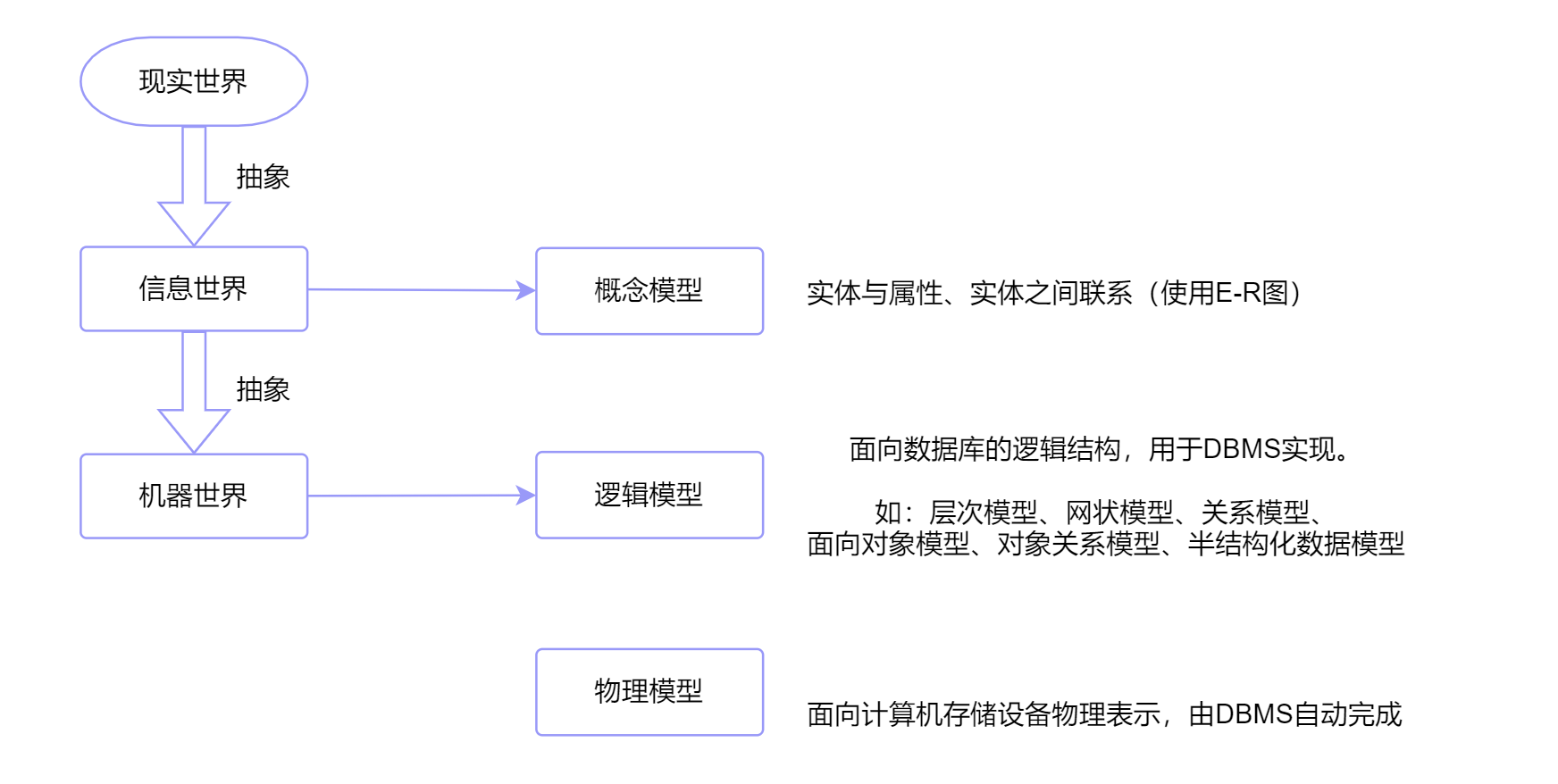
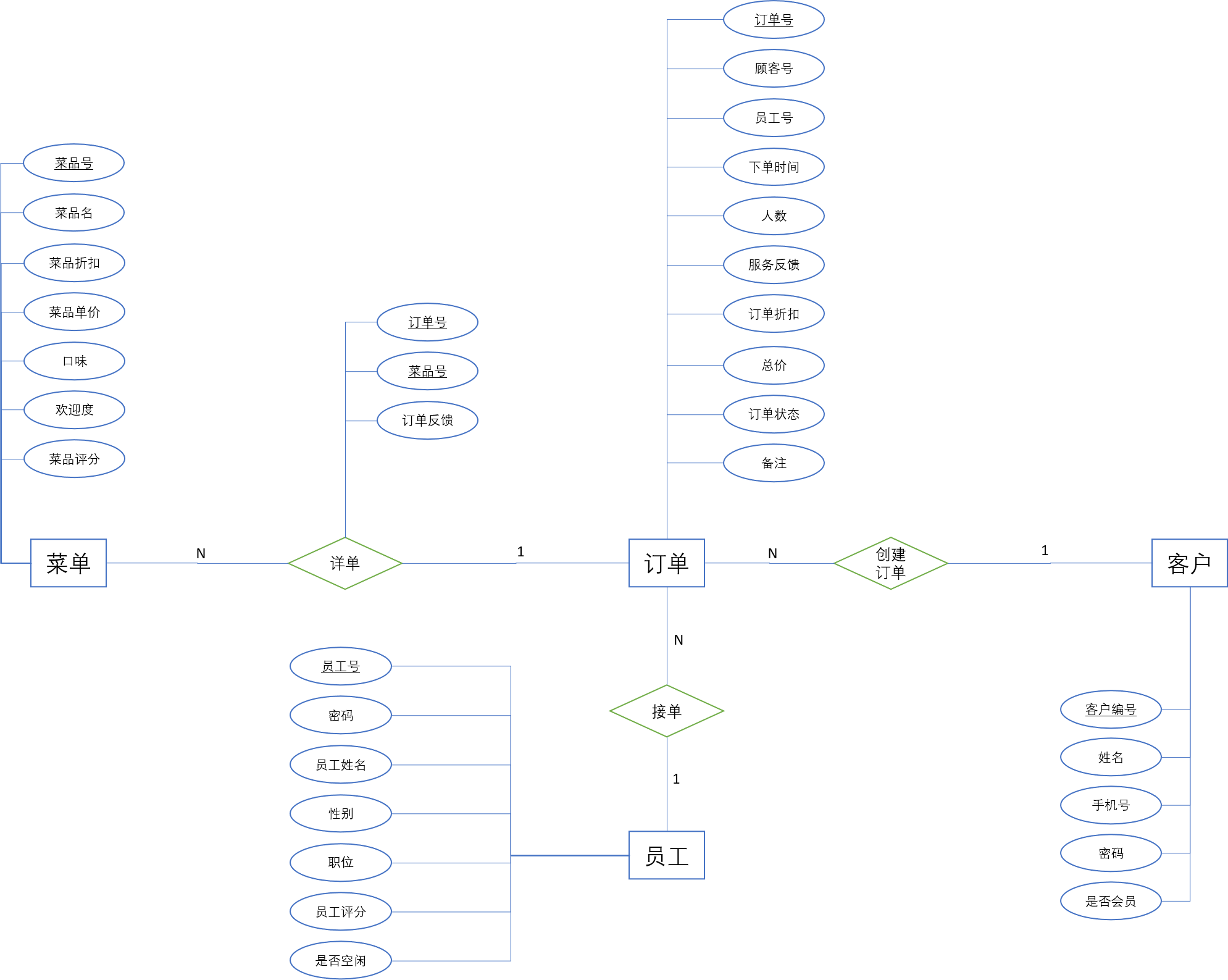
The conceptual model most commonly used in database design is the Entity-Relationship (ER) model.
Its three core elements are:
- entity
- attribute
- relationship
The relational model
The relational model is the core model used in modern database systems.
Its main concepts are:
- relation: a table;
- tuple: a row;
- attribute: a column;
- domain: the value set of an attribute;
- key: an attribute or attribute set that identifies tuples.
Important types of keys include:
- candidate key
- primary key
- foreign key
Relational algebra and SQL
Relational algebra provides the formal basis for relational queries.
Common operations:
- selection
- projection
- union
- difference
- Cartesian product
- join
- division
SQL can be divided into:
- DDL: data definition language
- DML: data manipulation language
- DQL: data query language
- DCL: data control language
Example:
CREATE TABLE Student (
    Sno CHAR(10) PRIMARY KEY,
    Sname VARCHAR(50),
    Age INT
);
SELECT Sname, Age
FROM Student
WHERE Age >= 18;Integrity, transactions, and recovery
Relational databases usually enforce several kinds of integrity constraints:
- entity integrity
- referential integrity
- user-defined integrity
A transaction is a logical unit of work. The classical ACID properties are:
- Atomicity
- Consistency
- Isolation
- Durability
Database systems also need:
- concurrency control;
- logging;
- crash recovery;
- backup and restore;
- authentication and authorization.
Final remarks
This review only sketches the backbone of introductory database theory, but the structure is clear:
- understand what a database system is;
- understand data models, especially the relational model;
- understand relational algebra and SQL;
- understand integrity, transactions, concurrency, recovery, and security.